Freight costs are one of the largest line items in any business’s supply chain budget — and one of the most controllable. Yet most businesses continue to overpay year after year simply because they haven’t audited how they ship, what they ship in, or who they ship with. A 10–20% reduction in freight spend is achievable for most businesses without sacrificing delivery speed or reliability.
This guide breaks down 10 actionable strategies that manufacturers, retailers, distributors, and businesses of all sizes use to reduce freight shipping costs — without cutting corners on service. Whether you ship 5 loads a month or 500, at least half of these strategies likely apply to your operation right now.
Why Freight Costs Are Higher Than They Need to Be
Before diving into strategies, it helps to understand why most businesses overpay in the first place. Freight pricing is complex — rates depend on weight, dimensions, freight class, lane, equipment type, seasonality, and dozens of accessorial charges. Most shippers set up a carrier relationship early on, accept the quoted rates, and never revisit them. That inertia is expensive.
Common reasons businesses overpay on freight include using the wrong shipping mode for their shipment size, inaccurate freight measurements triggering reclassification fees, not shopping rates across multiple carriers, and paying accessorial charges that could be avoided with better planning. Every one of these is fixable — starting today.
10 Strategies to Reduce Freight Shipping Costs
1. Choose the Right Shipping Mode for Every Shipment
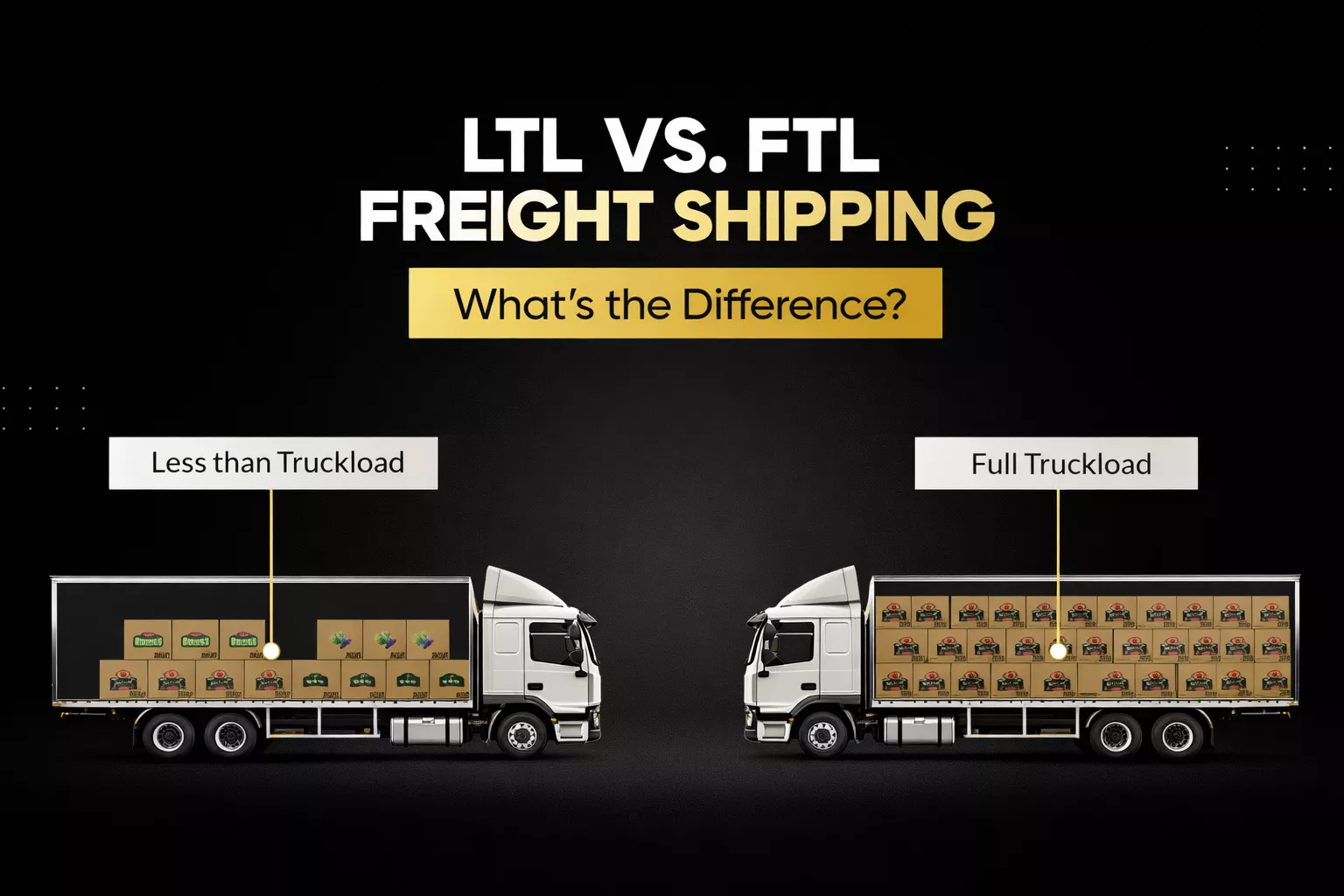
The single biggest cost lever in freight is mode selection. Sending a 4-pallet shipment via FTL because it’s “easier” wastes money on empty trailer space. Conversely, sending a 14-pallet shipment via LTL when FTL would be cheaper per pound is equally costly. The right mode decision alone can save 15–30% on individual shipments.
Use these general guidelines as a starting point for every shipment:
- Under 6 pallets or 5,000 lbs: LTL is almost always the cost-effective choice
- 6–12 pallets or 5,000–15,000 lbs: Compare LTL, volume LTL, and partial truckload quotes
- Over 12 pallets or 15,000 lbs: FTL typically delivers the lowest cost per pound
- Long-distance freight over 750 miles: Intermodal can reduce costs by 10–20% vs. over-the-road FTL
2. Consolidate Shipments Wherever Possible
Shipping three small loads in the same week to the same region costs significantly more than consolidating them into a single, larger shipment. Consolidation reduces the number of transactions, minimizes accessorial charges, and often moves your shipment into a more favorable pricing tier — either volume LTL or FTL, where per-pound rates drop sharply.
Review your outbound shipping calendar weekly. If you have multiple orders going to the same customer or geographic area within 3–5 days of each other, batch them into one load. The delivery window extension is usually worth the cost savings, and many customers prefer fewer, larger deliveries over multiple small ones anyway.
3. Get Accurate Freight Measurements — Every Time
This is one of the most overlooked cost drivers in LTL shipping. Carriers measure and weigh every LTL shipment at the terminal. If your declared dimensions or weight don’t match what they find, you’ll receive a reweigh or reclassification fee — which can double or even triple the original quote. These surprise invoices arrive after delivery when you have no recourse.
Always measure your freight after it’s fully packaged and palletized, including pallet height and overhang. Use a certified scale for accurate weight and add the pallet weight (typically 35–50 lbs) to your total. Consistent, accurate measurements eliminate the most preventable cost in LTL freight.
4. Understand and Optimize Your Freight Class
LTL freight class (NMFC classification 50–500) directly determines your base rate. Lower freight classes cost significantly less per hundredweight than higher classes. Freight class is determined by density, stowability, handling ease, and liability. Many shippers are assigned a higher class than necessary simply because they’ve never reviewed their NMFC code or optimized their packaging to increase density.
Increasing the density of your shipment — by reducing dead air space in packaging, stacking product more efficiently, or switching to denser packaging materials — can lower your freight class by one or two tiers. On high-volume shipping lanes, that class reduction translates directly into thousands of dollars in annual savings.
5. Eliminate Avoidable Accessorial Charges
Accessorial charges — fees added on top of the base rate — are one of the most consistent sources of freight cost overruns. Many of these charges are avoidable with better planning. Common accessorials and how to reduce them:
- Liftgate fees ($75–$150): Install a loading dock at your facility or confirm your customer has dock access before booking
- Residential delivery fees ($85–$200): Route deliveries to commercial addresses or freight terminals when possible
- Redelivery fees ($75–$200): Ensure someone is available to receive freight during the delivery window — missed appointments trigger costly redelivery charges
- Inside delivery fees ($75–$200): Coordinate dock-to-dock transfers whenever your customer’s facility allows
- Detention fees ($50–$100/hour): Have freight ready for pickup on time and clear receiving dock space before delivery arrives
Want to Know Where You’re Overpaying on Freight?
Our logistics team reviews your current freight spend and identifies savings opportunities across mode selection, carrier rates, and accessorial charges. No obligation, no cost.
Get Free Freight Review →6. Shop Rates Across Multiple Carriers — Every Time
Carrier rates for identical shipments on identical lanes can vary by 20–40% depending on which carrier you call. Regional carriers often undercut national carriers significantly on lanes within their coverage area. Spot rates fluctuate daily with market capacity, meaning a carrier that was expensive last week may be the cheapest option this week.
The businesses that consistently pay the lowest freight rates are the ones comparing multiple quotes before every shipment — not accepting the first number they receive. A freight broker does this automatically by running your shipment details against their entire carrier network simultaneously, delivering competitive quotes in minutes without you making a single carrier call.
7. Consider Intermodal for Long-Distance Freight
Intermodal shipping — moving freight by a combination of truck and rail — offers cost savings of 10–20% over standard FTL on lanes longer than 750 miles. Rail is significantly cheaper per mile than trucking, and modern intermodal services have closed most of the transit time gap that historically made rail unattractive for time-sensitive freight.
For businesses shipping regular FTL loads from the Midwest to the West Coast, or from the Southeast to the Northeast, intermodal deserves serious evaluation. The equipment used is identical to standard dry van — your freight loads into a 53-foot container with the same security and handling. The only difference is that part of the journey travels by rail instead of highway.
8. Optimize Packaging to Reduce Dimensional Weight
Carriers charge based on either actual weight or dimensional weight — whichever is higher. Dimensional weight penalizes low-density shipments that take up trailer space disproportionate to their actual weight. Oversized, poorly packed freight with excessive void fill gets penalized in both LTL freight class and dimensional weight calculations.
Conduct a packaging audit with your operations team. Look for shipments with significant air space inside boxes, pallet configurations that leave excess height without stacking, or products that could be repackaged more compactly. Even modest packaging improvements — reducing pallet height by 6 inches or tightening box dimensions — can lower freight class and reduce dimensional weight charges across thousands of annual shipments.
9. Ship During Off-Peak Times When Possible
Freight rates are driven by supply and demand. When carrier capacity is tight — holiday peak season (October–December), produce season (spring), and post-Chinese New Year surges — rates spike across all modes. When capacity is loose, rates soften and carriers compete aggressively for loads. Timing your non-urgent shipments to avoid peak periods can reduce spot rates by 15–25%.
Mid-week pickups (Tuesday–Thursday) typically see lower rates than Monday and Friday, when capacity is most constrained. Early morning pickups also help, as drivers prefer to maximize their daily hours of service. Building flexibility into your shipping schedule — even a 2–3 day window — gives your logistics partner room to find better rates and more reliable capacity.
10. Work With a Freight Broker to Access Volume Rates
Individual shippers rarely have the volume to negotiate preferred pricing with carriers. Freight brokers aggregate shipping volume across all their clients, giving them leverage to secure rates that individual businesses simply can’t access independently. That negotiated discount — typically 10–25% below standard rates — is passed through to you in every quote.
Beyond rate savings, brokers eliminate the internal staff time spent on carrier sourcing, booking, tracking, and claims. For most businesses shipping under 100 loads per month, the combined benefit of lower rates plus recovered staff hours delivers more value than managing freight internally — even after accounting for the broker’s margin built into the rate.
How Much Can You Actually Save?
The savings potential depends on how optimized your current freight program is, but here’s a realistic picture of what each strategy typically delivers:
| Strategy | Typical Savings | Effort Required |
|---|---|---|
| Correct mode selection | 15–30% per shipment | Low — review each load before booking |
| Shipment consolidation | 10–25% overall | Medium — requires scheduling coordination |
| Accurate measurements | Eliminates 20–100% cost overruns | Low — measure once per SKU/pallet config |
| Freight class optimization | 5–20% on LTL base rates | Medium — packaging and NMFC code review |
| Eliminating accessorials | $75–$500 per shipment | Low — operational process adjustments |
| Multi-carrier rate shopping | 20–40% vs. single-carrier | Low — use a broker for instant comparison |
| Intermodal for long-haul | 10–20% vs. FTL over-the-road | Low — ask broker to quote intermodal |
| Working with a freight broker | 10–25% vs. going carrier-direct | Very low — broker handles everything |
Where to Start: A Practical Action Plan
Trying to implement all 10 strategies simultaneously is overwhelming. Here’s a prioritized action plan that delivers the fastest returns with the least disruption:
Week 1 — Quick Wins (Zero Cost to Implement)
- Audit your last 30 freight invoices for accessorial charges — identify patterns and start eliminating them
- Verify dimensions and weights on your 5 most frequently shipped SKUs or pallet configurations
- Contact a freight broker to run your last 5 shipments through their carrier network — compare to what you paid
Month 1 — Process Changes
- Review your NMFC freight class codes with a broker or classification specialist — correct any miscodes
- Build a shipment consolidation schedule for your most active shipping lanes
- Evaluate packaging on your highest-volume products for density optimization opportunities
Quarter 1 — Strategic Shifts
- Establish a consistent multi-carrier quoting process for every shipment over 500 lbs
- Evaluate intermodal options for any FTL lane over 750 miles that runs at least monthly
- Implement a flexible shipping window policy for non-urgent outbound freight
See How Much You Could Be Saving
Share your freight details with our team and we’ll show you exactly where savings are available — across modes, carriers, and accessorial charges. No commitment required.
Talk to a Logistics Expert →Frequently Asked Questions
How much can a small business realistically save on freight?
Small businesses typically see the largest percentage savings because they’ve had the least leverage to negotiate rates historically. Implementing mode optimization, accurate measurements, and working with a broker often delivers 15–25% total freight cost reduction within the first 90 days — without changing service levels or delivery times.
Does consolidating shipments mean my customers wait longer?
Not necessarily. Consolidation only applies to shipments going to the same destination within a short window. If you have three orders for the same customer shipping Tuesday, Wednesday, and Thursday, holding Tuesday and Wednesday’s orders for a Thursday consolidated pickup adds one to two days of lead time — which most B2B customers readily accept when the operational benefit is explained.
What is the fastest way to reduce freight costs without changing operations?
The single fastest action is to start getting multi-carrier quotes through a freight broker instead of calling one carrier. This requires zero operational changes and typically surfaces 10–25% savings immediately. Submit your next shipment to a broker alongside your current carrier quote and compare the results directly.
Are freight rates negotiable even for small shippers?
Yes, but small shippers typically lack the volume to negotiate directly with carriers. The practical solution is working with a freight broker who aggregates volume across many clients. Your effective rate benefits from the broker’s collective negotiating leverage, giving you access to pricing tiers that would otherwise require shipping 5–10x your current volume to unlock.
How do I know if my freight class is correct?
Calculate your freight’s density (weight in lbs ÷ cubic feet) and cross-reference it against the NMFC density-based classification chart. Freight between 15–22.5 lbs per cubic foot is typically Class 100; above 30 lbs per cubic foot usually qualifies for Class 70 or lower. A freight broker or LTL specialist can verify your correct NMFC code and ensure you’re not paying for a higher class than your freight requires.
Is intermodal reliable enough for time-sensitive freight?
Modern intermodal service has improved significantly and delivers reliable transit times on major lanes. For freight that needs delivery within 5–7 days on long-haul routes, intermodal is a strong option. For shipments requiring 1–3 day delivery, over-the-road FTL remains the better choice. The right answer depends on your specific lane, timeline, and how much transit time variability your operation can absorb.
Stop Overpaying on Freight — Start Saving Today
Goldnova Logistics connects you with a vetted carrier network across LTL, FTL, Reefer, Flatbed, Intermodal, and more. Our team finds the right mode and the best rate for every shipment — so you ship smarter without doing the work yourself.
Tagged with :